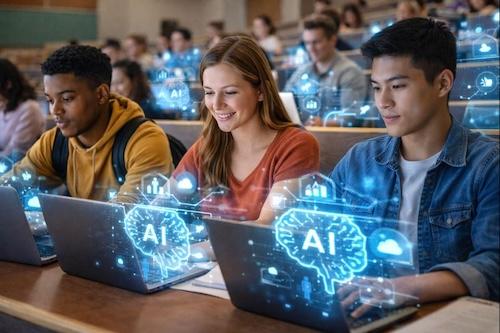
Education has always been the foundation of human progress, but in recent years, it has undergone a dramatic transformation. The digital era has reshaped how students learn, how teachers teach, and how institutions operate. Technology is no longer just a support tool—it has become a core part of modern education systems worldwide.
The Evolution of Traditional Education
For decades, education followed a traditional classroom-based model. Students gathered in physical classrooms, relied on textbooks, and learned through face-to-face instruction. While this approach built strong foundations, it often lacked flexibility and accessibility.
With the advancement of digital technologies, education has expanded beyond classroom walls. Online platforms, digital resources, and virtual classrooms now offer learners more control over their education.
Role of Technology in Modern Education
Technology plays a crucial role in shaping today’s education landscape. From online courses to smart classrooms, digital tools enhance learning experiences and improve academic outcomes.
Online Learning Platforms
Online learning platforms have revolutionized education by providing access to quality content anytime and anywhere. Students can enroll in courses, watch recorded lectures, and interact with instructors without geographical limitations.
This flexibility is especially beneficial for working professionals, remote learners, and students in underserved regions.
Digital Classrooms and Smart Learning
Smart classrooms use interactive boards, multimedia presentations, and real-time collaboration tools to make learning more engaging. These technologies encourage participation and help students understand complex concepts more easily.
Benefits of Digital Education
The shift toward digital education offers numerous advantages for students, teachers, and institutions.
Accessibility and Inclusivity
Digital education breaks down barriers by making learning accessible to people of all ages and backgrounds. Students with disabilities can benefit from assistive technologies, while learners in remote areas gain access to global resources.
Personalized Learning Experience
Technology enables personalized learning by adapting content to individual needs. Students can learn at their own pace, revisit lessons, and focus on areas where they need improvement.
Cost-Effective Education
Online courses and digital resources often reduce costs related to travel, accommodation, and printed materials. This makes education more affordable and sustainable.
Challenges Facing Digital Education
Despite its advantages, digital education also faces several challenges that need to be addressed.
Digital Divide
Not all students have equal access to devices and reliable internet connections. The digital divide can create inequality and limit learning opportunities for disadvantaged communities.
Lack of Human Interaction
Online learning may reduce face-to-face interaction between students and teachers. Building social skills and maintaining motivation can be more challenging in virtual environments.
The Role of Teachers in the Digital Age
Teachers remain central to the education system, even in the digital era. Their role has evolved from information providers to facilitators and mentors.
Educators now use technology to design interactive lessons, track student progress, and provide personalized support. Continuous professional development is essential for teachers to stay updated with digital tools.
Future Trends in Education
The future of education will be shaped by innovation and technological advancement. Artificial intelligence, virtual reality, and data analytics are expected to play a significant role.
Artificial Intelligence in Learning
AI-powered systems can analyze learning patterns and provide customized recommendations. Intelligent tutoring systems may become a common feature in future classrooms.
Virtual and Augmented Reality
Virtual and augmented reality can create immersive learning experiences. Students can explore historical sites, conduct virtual experiments, and visualize complex concepts.
Importance of Lifelong Learning
In a rapidly changing world, lifelong learning has become essential. Digital education supports continuous skill development and career growth.
Professionals can upskill through online courses, certifications, and micro-learning programs to remain competitive in the job market.
Conclusion
The digital era has transformed education into a more flexible, accessible, and innovative system. While challenges remain, the benefits of digital learning are undeniable. By embracing technology and focusing on inclusive strategies, education systems can empower learners and prepare them for the future.