Introduction
Education is evolving faster today than at any other time in human history. The shift is not merely about replacing notebooks with devices or moving classrooms online — it is about redesigning the entire learning experience. Technology has transformed how students access knowledge, how teachers deliver lessons, how institutions operate, and how learning continues beyond the walls of a school. This blog explores how technology is reshaping education, why it matters, and what the future of learning might look like in the coming decade.
1. Digital learning platforms have opened the classroom to the world
Just a decade ago, learning was bound to classrooms and textbooks. Today, students can access lectures from top universities, download study material instantly, watch experiments virtually, and attend courses from any country without leaving home. Platforms like Coursera, Khan Academy, and Udemy have democratized knowledge, allowing anyone — regardless of location or financial background — to learn and grow.
Benefits of digital learning platforms
- Access to global educators and high-level content.
- Flexible learning schedules for self-paced progress.
- Affordable or even free courses and certifications.
- Opportunity to learn skills outside traditional curriculum (coding, AI, design, etc.).
2. Smart classrooms enhance learning through interactivity
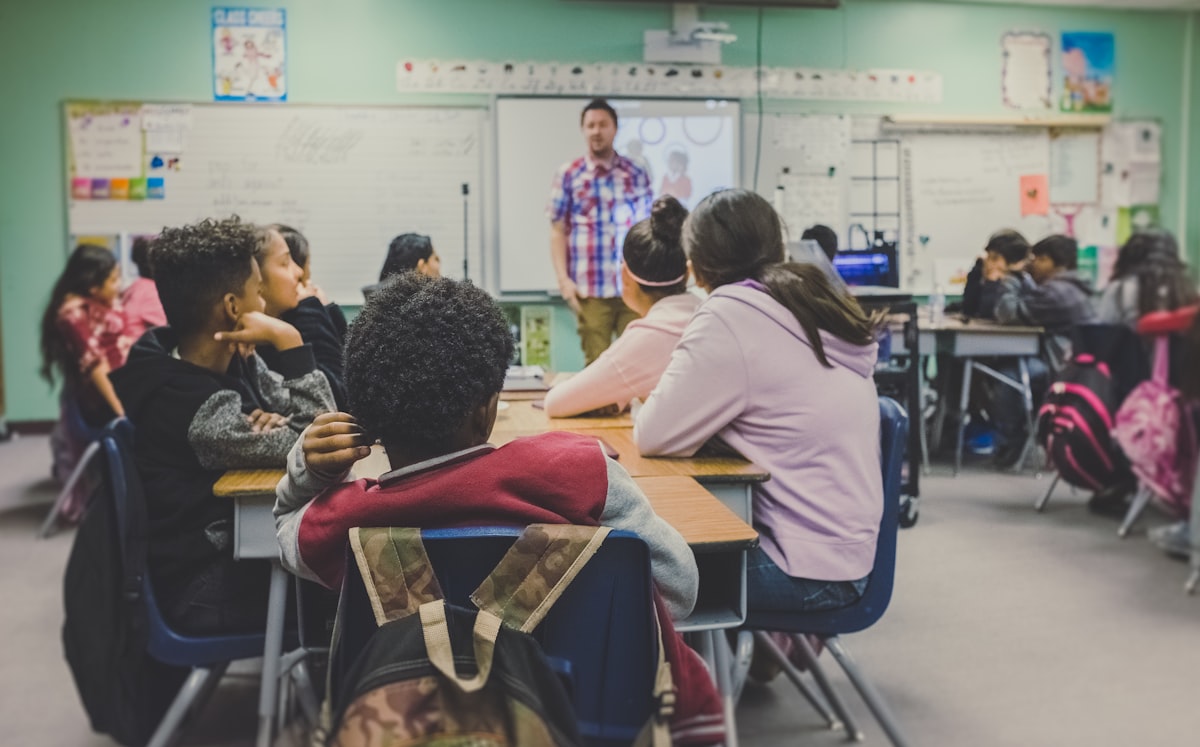
Smart boards, projectors, VR headsets, and student response systems make lessons immersive. Rather than listening passively, students interact, visualize concepts, and participate actively in the process. A biology student can explore the human heart in 3D, history students can walk through digital versions of ancient cities, and chemistry students can conduct virtual lab experiments without risk.
Why interactive tools work better
- Complex topics become easier to visualize and understand.
- Students stay engaged longer with interactive content.
- Hands-on learning boosts knowledge retention.
- Learning becomes fun rather than a chore.
3. Artificial Intelligence is personalizing education
AI-based learning systems can track each student’s progress, strengths, and weaknesses — and recommend lessons accordingly. A student struggling in mathematics can receive extra exercises automatically. Another who excels in English can be guided toward more advanced literature. Personalized learning replaces the one-size-fits-all model and ensures every learner gets what they actually need.
Examples of AI in education
- Adaptive learning apps like Duolingo and BYJU’S.
- AI tutors available 24/7 for instant query support.
- Automated grading and feedback systems for teachers.
- Learning analytics for progress tracking and reports.
4. Online examinations and digital credentials are becoming the norm
With improved cybersecurity and identity verification, online assessments are more secure and reliable than before. Schools and universities now conduct remote examinations, proctored tests, and digital certifications that carry equal credibility. Blockchain-based academic records are emerging as a future-proof way to store degrees and transcripts securely.
Benefits of digital assessment methods
- Faster results with instant automated checking.
- Reduced administrative cost and paper usage.
- Students can take tests from anywhere in the world.
- Data-based evaluation rather than subjective grading.
5. Skill-based learning is replacing traditional memorization
Gone are the days when education was purely exam-oriented. Employers now value skills over mere degrees. As a result, schools are shifting toward critical thinking, creativity, innovation, teamwork, entrepreneurship, coding, and project-based learning. Technology supports this shift by providing unlimited resources, real-case simulations, and collaborative platforms where students build practical skills.
Key skills education is focusing on now
- Programming & Robotics
- Communication & Presentation Skills
- Leadership & Problem-Solving
- Financial and Digital Literacy
6. Challenges that need to be addressed
While technology is revolutionizing education, it also brings challenges. Not every student has access to high-speed internet or smart devices. Teachers need training to use digital tools effectively. Data privacy, security, screen dependency, and distraction are real concerns. Therefore, balance and planning are crucial for sustainable progress.
Problems to overcome
- Digital divide between rural and urban learners.
- Need for teacher training and capacity building.
- Maintaining student focus in a device-rich environment.
- Cybersecurity threats and misuse of data.
Conclusion – The future of learning is hybrid, global, and skill-focused
Technology is not replacing education — it is upgrading it. The classrooms of tomorrow will be hybrid: part physical, part digital. Students will learn from local teachers and global instructors simultaneously. Knowledge will not be confined to books; it will be visual, interactive, and experience-driven. The future learner will be creative, adaptable, digitally skilled, and globally connected.
The transformation has already begun. The question is not whether technology will change education — but how quickly we choose to adapt and lead the transition. Institutions that embrace this evolution today will produce leaders tomorrow.
Images credit: Unsplash