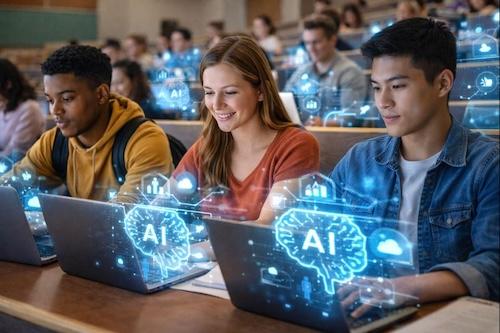
Education is undergoing one of the biggest transformations in history, and Artificial Intelligence (AI) is at the center of this revolution. In 2026, schools, universities, and online learning platforms are using AI to create personalized learning experiences, automate administrative tasks, and help students learn more effectively. Instead of replacing teachers, AI is becoming a powerful assistant that supports both educators and learners.
From AI-powered tutors to intelligent grading systems and adaptive learning platforms, technology is changing the way knowledge is delivered. Students can now receive instant feedback, customized study plans, and learning materials tailored to their individual strengths and weaknesses.
In this first part of our guide, we`ll explore how AI is reshaping education, the benefits it offers students and teachers, and why educational institutions worldwide are rapidly adopting AI-powered tools.
Why AI Is the Biggest Education Trend in 2026
The demand for flexible, personalized, and technology-driven education continues to grow. Students expect learning experiences that match their pace and interests, while teachers seek tools that reduce repetitive work and improve classroom engagement.
Artificial Intelligence addresses these challenges by analyzing learning behavior, identifying knowledge gaps, and recommending customized educational content. This helps improve academic performance while making education more accessible and engaging.
What Is Artificial Intelligence in Education?
Artificial Intelligence in education refers to the use of intelligent software that can analyze student performance, provide personalized learning recommendations, automate grading, answer questions, and support teachers in delivering better educational experiences.
Examples include:
- AI-powered tutoring systems
- Virtual classroom assistants
- Automated grading software
- Personalized learning platforms
- Language translation tools
- Speech-to-text learning applications
- AI-generated quizzes and assessments
1. Personalized Learning for Every Student
Every student learns differently. Traditional classrooms often follow a single teaching method, but AI enables personalized education based on each learner`s progress and abilities.
Adaptive Learning Platforms
AI-powered platforms adjust lessons automatically depending on student performance. If a learner struggles with a topic, additional practice materials and explanations are provided.
Individual Learning Paths
Instead of studying the same material at the same speed, students receive customized learning paths that match their skills and goals.
Instant Feedback
Students no longer need to wait days for results. AI systems provide immediate feedback on quizzes, assignments, and practice exercises, helping learners correct mistakes quickly.
2. AI Supports Teachers Instead of Replacing Them
One of the biggest misconceptions is that AI will replace teachers. In reality, AI handles repetitive administrative tasks, allowing educators to spend more time teaching, mentoring, and supporting students.
Automated Grading
AI can evaluate multiple-choice tests, assignments, and even certain written responses, significantly reducing teachers` workload.
Lesson Planning Assistance
Teachers can use AI tools to create lesson plans, quizzes, presentations, and classroom activities more efficiently.
Student Performance Analysis
AI analyzes classroom performance and identifies students who may need additional support before they fall behind.
3. Online Learning Has Become Smarter
Online education continues to expand in 2026. AI improves virtual learning by making courses more interactive and engaging.
Virtual Tutors
AI tutors answer student questions 24/7, explain difficult concepts, and recommend additional learning resources.
Interactive Learning Experiences
Educational platforms now use AI to create simulations, personalized quizzes, and interactive exercises that improve student engagement.
Language Translation
AI translation tools make educational content accessible to students from different countries, helping create a more inclusive learning environment.
4. Improving Student Engagement
Keeping students motivated has always been a challenge. AI-powered learning systems use gamification, personalized rewards, and adaptive content to increase engagement and improve learning outcomes.
- Interactive quizzes
- Learning games
- Personalized study recommendations
- Real-time progress tracking
- Achievement badges and rewards
5. AI Helps Identify Learning Difficulties Early
One of AI`s greatest strengths is its ability to analyze large amounts of learning data. Educational institutions can identify students who may be struggling long before traditional assessments reveal the problem.
Teachers can then provide targeted support, helping students improve their understanding and confidence.
Conclusion
Artificial Intelligence is making education more personalized, accessible, and efficient than ever before. Rather than replacing educators, AI empowers teachers with better tools while helping students learn at their own pace.
In , we`ll explore AI`s challenges in education, ethical concerns, future classroom innovations, career preparation, and practical strategies schools can use to adopt AI successfully.
6. Challenges of AI in Education
Although Artificial Intelligence offers remarkable opportunities for education, its adoption also comes with challenges. Schools and universities must address issues related to technology access, data privacy, teacher training, and responsible AI usage to ensure every student benefits equally.
Digital Divide
Not every student has access to high-speed internet, modern devices, or AI-powered learning platforms. Educational institutions and governments need to invest in digital infrastructure to reduce this gap and provide equal learning opportunities.
Teacher Training
AI tools are most effective when teachers know how to use them. Professional development programs should help educators integrate AI into lesson planning, assessments, and classroom management while maintaining strong teaching practices.
Balancing Technology and Human Interaction
While AI can automate many tasks, it cannot replace empathy, creativity, leadership, and emotional support provided by teachers. The best educational systems combine advanced technology with meaningful human interaction.
7. Ethical Use of AI in Education
As AI becomes part of daily learning, educational institutions must establish clear ethical guidelines to protect students and maintain academic integrity.
Student Privacy
AI platforms collect learning data to personalize education. Schools must ensure this information is securely stored and used responsibly while complying with privacy regulations.
Academic Integrity
Generative AI can assist students with research and writing, but it should not be used to complete assignments dishonestly. Schools are encouraging responsible AI use by teaching students how to verify information, cite sources, and produce original work.
Reducing Bias
AI systems should be regularly evaluated to ensure recommendations and assessments remain fair, inclusive, and free from discrimination.
8. AI Is Preparing Students for Future Careers
Modern workplaces increasingly rely on Artificial Intelligence. Educational institutions are responding by teaching students digital literacy, problem-solving, critical thinking, and AI-related skills that employers value.
Learning AI Fundamentals
Many schools now introduce basic AI concepts, coding, data analysis, and machine learning so students understand how intelligent technologies work and how they can be used responsibly.
Career Readiness
AI-powered career guidance systems analyze student interests, strengths, and academic performance to recommend suitable career paths, internships, and certification programs.
Collaboration Skills
Rather than competing with AI, students are learning how to collaborate with intelligent tools to improve creativity, productivity, and decision-making.
9. Future Trends in Education Beyond 2026
The future of education will continue to evolve as AI technologies become more advanced. Learning environments are expected to become increasingly personalized, immersive, and data-driven.
Virtual Reality Classrooms
Students may soon explore historical landmarks, scientific laboratories, and distant planets through immersive virtual reality experiences supported by AI-generated simulations.
Intelligent Learning Assistants
Future AI assistants will provide personalized tutoring, monitor student progress continuously, and recommend learning resources in real time.
Global Classrooms
Real-time translation powered by AI will make it easier for students and teachers from different countries to collaborate, encouraging international learning and cultural exchange.
- Smarter adaptive learning systems
- Real-time multilingual education
- AI-powered virtual laboratories
- More personalized assessments
- Greater accessibility for learners with disabilities
10. Best Practices for Schools Implementing AI
Schools and universities can maximize the benefits of AI by adopting a thoughtful implementation strategy.
Develop Clear AI Policies
Educational institutions should create guidelines explaining how AI tools may be used by teachers and students while protecting academic honesty and personal data.
Invest in Infrastructure
Reliable internet access, secure cloud platforms, and modern devices are essential for successful AI adoption.
Encourage Lifelong Learning
Teachers, students, and administrators should continuously update their knowledge as AI technologies evolve. Workshops, certifications, and professional development programs can help everyone stay current.
Monitor Educational Outcomes
Schools should regularly evaluate how AI affects student performance, engagement, and overall learning quality to ensure technology supports educational goals effectively.
Benefits of AI in Education
- Personalized learning experiences
- Faster assessment and feedback
- Reduced teacher workload
- Improved student engagement
- 24/7 learning support
- Better accessibility for diverse learners
- Enhanced career preparation
- Data-driven educational decisions
Frequently Asked Questions (FAQs)
Will AI replace teachers?
No. AI is designed to support teachers by automating repetitive tasks and providing learning insights. Teachers remain essential for mentoring, creativity, and emotional support.
Can AI improve student performance?
Yes. Personalized learning, instant feedback, and adaptive study plans help many students understand concepts more effectively and improve academic results.
Is AI safe for students?
AI can be safe when educational institutions follow strong privacy policies, protect student data, and teach responsible technology use.
What skills should students develop in the AI era?
Critical thinking, communication, creativity, digital literacy, problem-solving, collaboration, and responsible AI usage are among the most valuable skills for future careers.
Final Thoughts
Artificial Intelligence is redefining education by making learning more flexible, personalized, and accessible than ever before. While challenges such as privacy, digital inequality, and ethical use must be addressed, AI has the potential to improve educational outcomes for millions of learners worldwide.
The future of education will not be shaped by technology alone but by the collaboration between innovative teachers, motivated students, and intelligent AI systems. Institutions that embrace this balanced approach will be better prepared to educate the next generation for an increasingly digital and connected world.