Education in 2026 is no longer confined to traditional classrooms with blackboards and textbooks. The rapid advancement of technology has transformed how students learn, how teachers teach, and how institutions operate. From online courses and artificial intelligence tutors to virtual reality classrooms, education is experiencing one of the biggest revolutions in history.
The shift is not just about using computers in classrooms. It is about creating smarter, more flexible, and more personalized learning environments. As digital tools become more accessible worldwide, education is evolving into a system that focuses on accessibility, customization, and global connectivity.
The Rise of Online Learning Platforms
Online learning platforms have become one of the most significant changes in modern education. Students can now enroll in courses from universities and institutions around the world without leaving their homes.
Accessibility for Everyone
Online education removes geographical barriers. A student in a small town can access the same quality lectures as someone in a major city. This has created equal opportunities for millions of learners.
Flexible Learning Schedules
Unlike traditional classrooms, online courses allow students to learn at their own pace. Recorded lectures and downloadable materials give learners control over their study time.
Cost-Effective Education
Online programs often cost less than on-campus degrees. Students save money on transportation, accommodation, and physical materials.
Artificial Intelligence in Education
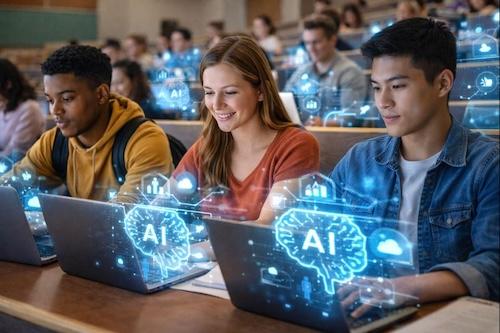
Artificial Intelligence (AI) is playing a powerful role in shaping modern education systems.
Personalized Learning
AI-powered platforms analyze student performance and adapt lessons according to individual needs. This ensures that students who struggle with certain topics receive additional support, while advanced learners can move ahead faster.
Smart Assessment Systems
Automated grading systems reduce teachers’ workload and provide instant feedback to students. Immediate results help learners identify their weaknesses quickly.
Virtual Tutors
AI chatbots and virtual assistants are now available 24/7 to answer student queries, making learning continuous and accessible at any time.
Virtual Reality and Augmented Reality
Virtual Reality (VR) and Augmented Reality (AR) are creating immersive learning experiences that were once unimaginable.
Interactive Science Experiments
Students can perform virtual laboratory experiments safely without needing expensive equipment. This is especially beneficial for schools with limited resources.
Historical and Cultural Exploration
VR allows students to visit historical landmarks or explore different countries virtually. Learning becomes engaging and memorable.
Medical and Technical Training
Medical students and engineers can practice complex procedures in simulated environments, improving skills without real-world risks.
The Importance of Skill-Based Learning
Modern education is shifting from memorization to skill development. Employers in 2026 prioritize practical skills over theoretical knowledge.
Critical Thinking
Students are encouraged to analyze problems, think creatively, and develop solutions rather than simply memorizing facts.
Digital Literacy
Understanding digital tools, cybersecurity basics, and online communication is now essential for career success.
Collaboration and Communication
Group projects and online teamwork platforms help students develop interpersonal skills needed in modern workplaces.
Challenges Facing Modern Education
Despite technological advancements, education systems still face significant challenges.
Digital Divide
Not all students have access to reliable internet or devices. This gap can create inequality in learning opportunities.
Screen Time Concerns
Excessive screen usage may impact students’ physical and mental health. Balancing digital and offline learning is crucial.
Teacher Training
Educators must continuously update their skills to use modern technologies effectively in classrooms.
The Role of Teachers in 2026
Technology does not replace teachers; it enhances their role. Teachers now act more as mentors and facilitators rather than just information providers.
Guiding Personalized Learning
Teachers analyze data provided by AI systems to understand student performance and provide targeted guidance.
Encouraging Creativity
With information readily available online, teachers focus on inspiring innovation, curiosity, and independent thinking.
The Future Outlook
Education in the coming years will likely become even more hybrid — combining physical classrooms with digital tools. Lifelong learning will become a necessity as industries evolve rapidly. Professionals will continuously upgrade their skills through short online certifications and specialized programs.
Universities and schools that adapt to technological changes will thrive, while outdated systems may struggle to remain relevant.
Conclusion
The future of education in 2026 is dynamic, inclusive, and technology-driven. Digital platforms, AI, VR, and skill-based learning are transforming how knowledge is delivered and consumed. While challenges remain, the opportunities for growth and innovation are enormous.
Education is no longer limited by walls or borders. With the right balance of technology and human guidance, learning can become more effective, engaging, and accessible for everyone around the world.